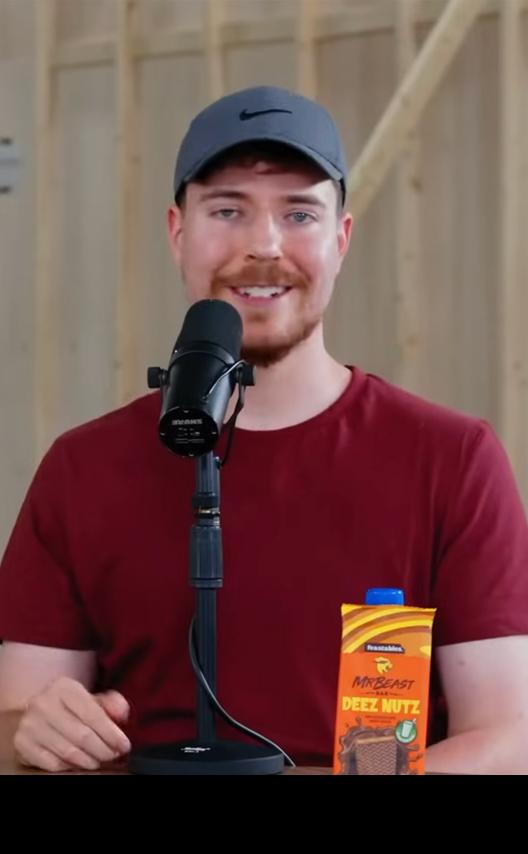

YouTube's automatic captions censor swear words because of a channel setting called "Don't show potentially inappropriate words", which is on by default. YouTube Help says it replaces those words with "an open bracket, two underscores, and a closed bracket", which is the [ __ ] you see on screen, and that it is "intended to help prevent potentially inappropriate words mistakenly appearing in automatic captions".
Only the channel owner can switch it off: in YouTube Studio, open Settings, select Channel, then Advanced settings, and under "Auto-generated captions" deselect Don't show potentially inappropriate words. YouTube documents no switch for viewers. Captions the creator edited by hand are not affected, and words burned into the picture show exactly as they were typed. Everything below was checked against YouTube's help pages on 11 November 2026.
Which captions get censored and which do not
| Caption type | Are swear words masked? | Who controls it |
|---|---|---|
| Automatic captions on uploads and live streams | Yes, as [ __ ], by default | The channel owner, in Studio advanced settings |
| Auto-translated subtitles | Covered by the same setting, per YouTube's note | The channel owner, same setting |
| Automatic captions the creator has edited | No. YouTube says the setting does not affect manually edited captions | The creator, in the Studio caption editor |
| A caption file the creator uploaded or typed | Not an automatic track, so outside the setting as YouTube describes it | The creator |
| Captions burned into the video | No. They are part of the picture | Whoever made the video |
| The audio | No. The setting "doesn't affect any audio tracks" | Nobody; it plays as recorded |
So a bracket in the captions does not mean the video was bleeped. The sound is untouched; only the automatic text is masked.
Why YouTube masks words in automatic captions
YouTube's stated reason turns on one word: "mistakenly". The setting is not described as a ban on swearing. It is there in case the speech recognizer writes a swear word that nobody said. The same help page warns that automatic captions "might misrepresent the spoken content due to mispronunciations, accents, dialects, or background noise", and a misheard word that happens to be rude is the worst version of that error, especially on a children's video.
Researchers have documented the problem. A paper accepted at AAAI 2022, Inadvertent Unsafe Transcription of Kids' Content on YouTube, reported that well-known speech recognition systems can produce highly inappropriate text while transcribing children's videos, and gave it a name: "inappropriate content hallucination".
The cost of the default is that it also hides words the speaker really did say. A comedy special, a gaming stream or an interview with strong language gets brackets in its automatic captions, and deaf and hard-of-hearing viewers get less than hearing viewers do. YouTube's help page does not list the masked words or say how they are chosen, so you cannot predict exactly which ones will go.
YouTube has not published a launch date that we could find. The feature is not new: a blog post by the captioning service Amara dated 16 October 2020 already describes auto-captions that read "[__]" and says creators can turn the feature off.
How to turn off censored captions on your channel
These are YouTube Help's steps, in its own words:
- Sign in to YouTube Studio.
- From the left menu, select Settings.
- Select Channel, then Advanced settings.
- Under the "Auto-generated captions," deselect Don't show potentially inappropriate words.
Three things to know before you change it:
- It is a channel setting. The help page gives no per-video version, and says automatic captioning "applies to uploaded videos and live streams".
- It does not touch monetization. YouTube states that the setting "doesn't affect your video's monetization status". It changes caption text only.
- Check a video afterwards. The page does not say how quickly captions on existing videos change, so open one and look.
With the filter off, a misheard swear word can appear in your captions, so YouTube's own advice applies with more force: "review all their automatically generated captions".
How to fix one video and leave the filter on
If you want the filter for most uploads but the real words on one video, edit that video's track. YouTube says the setting does not affect manually edited captions, and its Edit or remove captions page gives the steps.
- In YouTube Studio, select Subtitles from the left menu and click the video.
- For the language you want, select Edit in the Subtitles column.
- For automatic captions, select Duplicate and edit, then Continue.
- Click inside any line in the caption track panel and type the words you want shown.
- Click Publish. YouTube generates a new caption track that includes your revisions.
You can also skip the automatic track entirely: under Subtitles, click ADD LANGUAGE, then ADD, and choose Upload file or Type manually. Does YouTube auto-generate subtitles covers reviewing the automatic track in more detail.
What viewers can do
Not much, and it is better to know that than to hunt for a setting. YouTube's caption settings for viewers cover turning captions on and off and changing the font, color, size and background. Nothing there shows masked words.
- Look for another caption track. If the creator added their own captions, they are listed in the captions menu, and the setting does not apply to a track the creator wrote.
- Do not expect auto-translate to help. YouTube's note says the setting covers auto-translated subtitles as well as automatic captions.
- The audio is unchanged. If you can hear the video, the word is still in the sound.
- Ask the creator. The switch is on their side, and it stays on until they change it. Adding subtitles to someone else's YouTube video explains what else is possible on a video you do not own.
Brackets are a deliberate mask. If the captions instead show a real word nobody said, such as "foreign" or "heat" over music, that is a recognition error, covered in why YouTube captions say "foreign", "heat" or "thank you". If captions do not appear at all, see YouTube captions not working.
Burned-in captions show exactly what you type
The filter works on YouTube's automatic caption track. Text that is part of the video frames is not a caption track, so no caption setting, on the creator's side or the viewer's, changes it. That cuts both ways: viewers cannot turn burned-in captions off or restyle them, and YouTube will still make its own automatic track for the upload, brackets included, unless you edit or delete it in Studio.
CapsAI makes burned-in captions. You upload an MP4 or MOV of up to 10 minutes, pick the spoken language from 11 options including English, and get a timed draft you can edit line by line. The draft comes from speech recognition, so read it against the audio like any other automatic caption. Whatever text you leave on a line, spelled out, starred or softened, is what gets drawn into the video. You can try it on a video of up to 3 minutes without signing up, and you sign in when you export. Exporting needs a one-time pack, from $4 (₹49 in India, €4 in the euro area).
Know the limits before you choose this route. CapsAI does not give you an SRT or VTT file, does not upload a caption track to your YouTube video, does not take a YouTube link and does not translate. Its output is one MP4. If you want selectable closed captions with the real words, YouTube Studio's own caption editor is the right tool. The YouTube subtitle generator page has the details for landscape uploads, and burn subtitles to video compares burned-in text with a caption track.
What to do next
If you run the channel, decide between the two fixes: switch the filter off under Settings, Channel, Advanced settings, or leave it on and edit the tracks where the real words matter. If you are a viewer, check the captions menu for a creator-made track, then tell the creator about the setting. And if you want the words on screen for everyone regardless of caption settings, open the uploader with English selected and burn them in.
 By Aniket TeliPublished 11 Nov 2026