
SRT vs VTT vs others: Complete Creator Guide | CapsAI
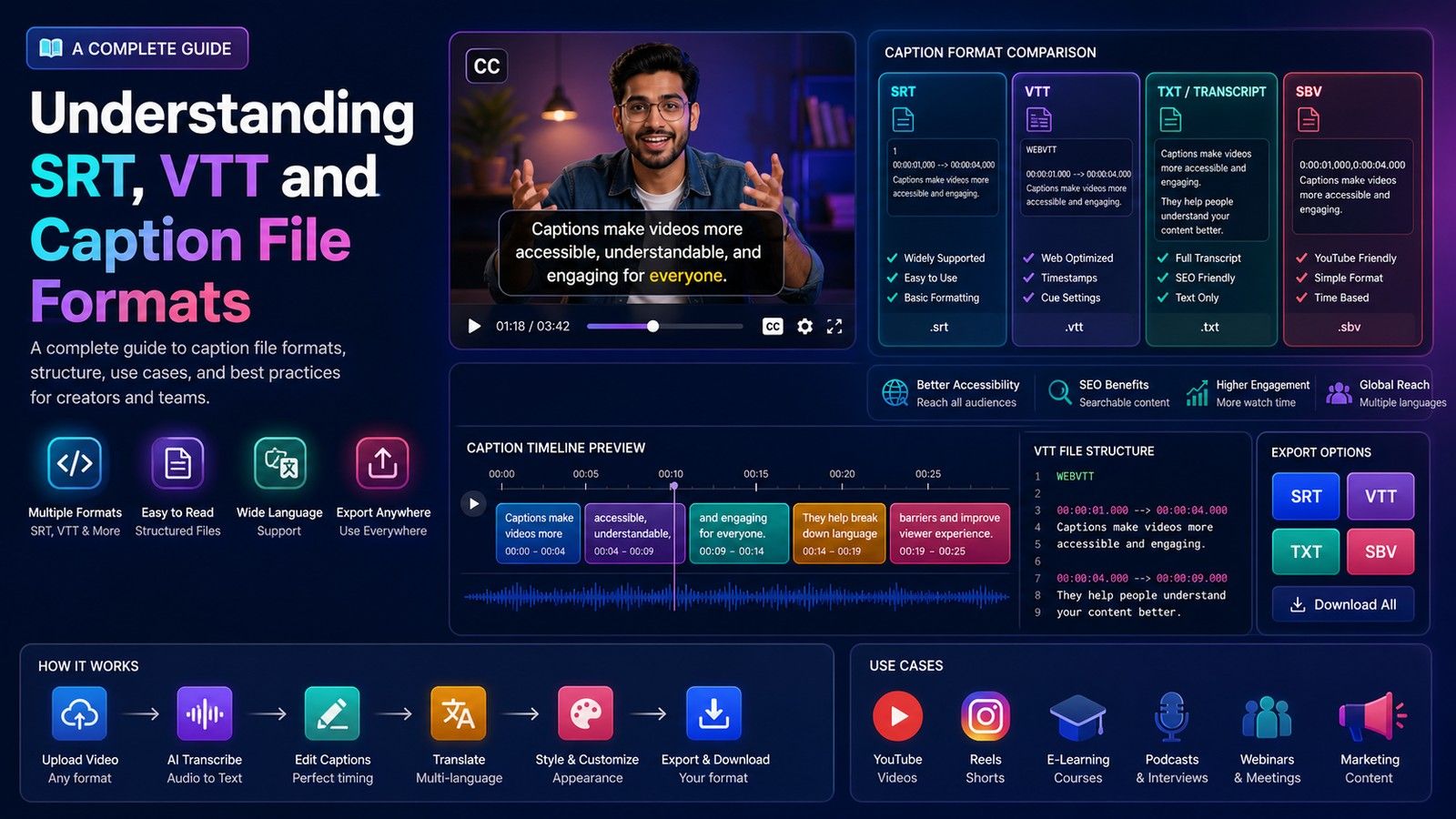
Understanding SRT, VTT and Caption File Formats (A Complete Guide) matters because creators are publishing more videos across more platforms, but viewers are giving each clip less time to prove its value. When captions are clear, searchable, and styled for mobile, a viewer can understand the hook before they turn the sound on. That is the practical advantage of SRT vs VTT vs others: it makes content easier to watch, easier to reuse, and easier to discover.
This guide is written for Video editors, web developers.. It follows the same creator-first workflow we recommend inside CapsAI: start with the source video, generate a reliable transcript, turn that transcript into captions, edit the details that affect trust, and publish versions that match the platform. The goal is not to add subtitles as decoration. The goal is to make every video easier to consume, search, translate, and repurpose.
You will see references to subtitle file formats, WebVTT guide, caption file extension throughout the guide because those topics are connected. A caption workflow is rarely just one button. It includes audio quality, transcript cleanup, caption placement, export format, localization, repurposing, and performance review.
Quick Answer
The fastest way to handle SRT vs VTT vs others is to upload or paste the video into an AI caption workflow, generate captions automatically, review names and technical terms, style the subtitles for mobile, then export the final video or caption file. CapsAI is built for that workflow because creators often need captions, transcripts, clips, and downloader tools in one place.
For a practical starting stack, use AI Subtitle Generator, Auto Caption Generator, YouTube Shorts Downloader, Instagram Reels Downloader, YouTube Transcript Generator depending on whether you need captions, downloads, transcripts, or short-form repurposing.
Why It Matters
Creators lose attention when viewers cannot understand the first few seconds. That is especially true on mobile, where people scroll in public places, watch without sound, and decide quickly whether a video deserves more time. Captions give the message a second channel. They make the hook visible, support non-native speakers, and help viewers follow fast cuts, accents, and noisy recordings.
For search, captions also create structure. A clean transcript can clarify the topic of a video, support better descriptions, improve repurposing, and make it easier to transform one recording into social clips, summaries, blog drafts, and email content. That is why SRT vs VTT vs others should be treated as a publishing system rather than a last-minute edit.
For teams, the value is consistency. Agencies, educators, coaches, and brands need repeatable output. If every editor styles captions differently, viewers notice. A defined workflow gives every video the same baseline: readable captions, correct exports, clear filenames, reusable transcripts, and a simple review process.
Step-by-Step Guide
- Start with the best source file you have. Clean audio and a stable export create better AI captions, so avoid compressed screen recordings when the original video is available.
- Generate the transcript before styling captions. A transcript-first workflow lets you catch names, product terms, regional words, and platform-specific phrases before they become visible errors.
- Edit the first 15 seconds carefully. The hook, promise, and context need near-perfect captions because this is where retention is won or lost.
- Style captions for the platform. Shorts, Reels, TikToks, webinars, and course videos each need different caption placement, size, contrast, and pacing.
- Add contextual assets after captions are correct. Use b-roll, emoji-like emphasis, waveform timing, or callouts only when they clarify the message rather than covering it.
- Export both the finished video and the caption file when possible. MP4 is useful for publishing, while SRT or VTT gives you future flexibility.
- Track performance after publishing. Look at watch time, replays, saves, comments, and completion rate to decide whether the caption style is helping or distracting.
Best Practices
Keep subtitles readable before they are stylish. A bold font, strong contrast, and safe-zone placement usually outperform complicated animations. If viewers must work to read a caption, the caption is failing its job. This is especially important for SRT vs VTT vs others, where the viewer may be learning a workflow, comparing tools, or watching in a second language.
Use short caption chunks. Long lines feel slow and crowded on vertical video. Break captions around natural speech patterns, not just fixed character counts. If a sentence contains two ideas, split it into two caption moments so the viewer can process each idea quickly.
Review proper nouns manually. AI can be excellent at speech recognition and still miss creator names, regional terms, brand names, acronyms, and product labels. A two-minute manual pass can protect trust and prevent comments from focusing on errors instead of the message.
Common Mistakes
- Publishing raw auto-captions without review, especially when the video includes names, numbers, product terms, or mixed-language speech.
- Placing captions too low on Shorts, Reels, or TikToks, where platform controls can cover the final line.
- Using tiny caption text because it looks clean on desktop, then discovering it is hard to read on a phone.
- Treating every platform the same instead of adapting caption pacing, safe zones, and context for each distribution channel.
- Forgetting to save a transcript, which makes repurposing, translation, and SEO work harder later.
Advanced Tips
Build a caption style guide. Define font size, line breaks, color, highlight rules, speaker labels, and export formats. This helps solo creators move faster and helps teams avoid inconsistent output. A simple guide can include examples for talking-head clips, tutorials, podcast excerpts, product demos, and multilingual videos.
Use transcripts as a content engine. Once the transcript is clean, turn it into video descriptions, blog outlines, newsletter summaries, social captions, and quote cards. The transcript is not just an accessibility artifact. It is a reusable content asset.
Localize selectively. You do not need to translate every video into ten languages immediately. Start with the audience that already appears in comments, analytics, customer requests, or sales conversations. Then expand when you see retention and conversion signals.
Real Creator Use Cases
A YouTube educator can use SRT vs VTT vs others to caption tutorials, export an SRT file, and reuse the transcript as a lesson summary. The same workflow helps viewers who pause, skim, or revisit steps without replaying the full video.
A podcast team can turn long recordings into short clips, caption each highlight, and publish platform-native snippets for Shorts, Reels, and TikTok. The transcript gives the team titles, hooks, and social captions without starting from a blank page.
A regional creator can combine subtitles and translation to reach viewers who understand the topic but prefer captions in Hindi, Hinglish, Tamil, Telugu, Marathi, or another local language. This makes the content more inclusive without changing the creator's voice.
Tools & Resources
CapsAI workflows commonly combine AI Subtitle Generator, Auto Caption Generator, YouTube Shorts Downloader, Instagram Reels Downloader, YouTube Transcript Generator for downloading, captioning, transcripts, and repurposing.
For deeper creator workflows, also review Long Video to Short Video, Video Subtitle Generator, Subtitle Generator, YouTube Thumbnail Downloader, Pricing so your subtitle process connects with editing, thumbnails, pricing, and publishing.
A strong tool stack should reduce steps, not add them. If you need to download a public clip, caption a video, create a transcript, repurpose long footage, or export subtitles, keep those tasks close together. That is the main reason creators use CapsAI as a workflow hub instead of jumping between unrelated tools.
FAQ Section
The FAQ section below covers practical questions creators ask about SRT vs VTT vs others, including setup, accuracy, editing, exports, accessibility, and platform-specific publishing.
CTA
Start by testing your next video in Auto Caption Generator, AI Subtitle Generator, Long Video to Short Video. Generate captions, review the transcript, export the result, and compare the viewer response against your previous version.
FAQs
What is an SRT file?
Yes. For SRT vs VTT vs others, the strongest workflow is to start with clean audio, generate accurate captions, review key terms manually, style subtitles for the platform, and use CapsAI tools to export or repurpose the finished video.
”, “How to upload VTT to YouTube?
Yes. For SRT vs VTT vs others, the strongest workflow is to start with clean audio, generate accurate captions, review key terms manually, style subtitles for the platform, and use CapsAI tools to export or repurpose the finished video.
”, “Which format for HTML5 video captions.?
Yes. For SRT vs VTT vs others, the strongest workflow is to start with clean audio, generate accurate captions, review key terms manually, style subtitles for the platform, and use CapsAI tools to export or repurpose the finished video.
What is the best way to start with SRT vs VTT vs others?
Yes. For SRT vs VTT vs others, the strongest workflow is to start with clean audio, generate accurate captions, review key terms manually, style subtitles for the platform, and use CapsAI tools to export or repurpose the finished video.
Can CapsAI help with SRT vs VTT vs others?
Yes. For SRT vs VTT vs others, the strongest workflow is to start with clean audio, generate accurate captions, review key terms manually, style subtitles for the platform, and use CapsAI tools to export or repurpose the finished video.
Do captions improve watch time on short-form videos?
Yes. For SRT vs VTT vs others, the strongest workflow is to start with clean audio, generate accurate captions, review key terms manually, style subtitles for the platform, and use CapsAI tools to export or repurpose the finished video.
Should creators edit AI captions before publishing?
Yes. For SRT vs VTT vs others, the strongest workflow is to start with clean audio, generate accurate captions, review key terms manually, style subtitles for the platform, and use CapsAI tools to export or repurpose the finished video.
Can I export captions as SRT or VTT?
Yes. For SRT vs VTT vs others, the strongest workflow is to start with clean audio, generate accurate captions, review key terms manually, style subtitles for the platform, and use CapsAI tools to export or repurpose the finished video.
How many internal links should a creator workflow include?
Yes. For SRT vs VTT vs others, the strongest workflow is to start with clean audio, generate accurate captions, review key terms manually, style subtitles for the platform, and use CapsAI tools to export or repurpose the finished video.
What mistakes should creators avoid with subtitles?
Yes. For SRT vs VTT vs others, the strongest workflow is to start with clean audio, generate accurate captions, review key terms manually, style subtitles for the platform, and use CapsAI tools to export or repurpose the finished video.
Can subtitles help multilingual audiences?
Yes. For SRT vs VTT vs others, the strongest workflow is to start with clean audio, generate accurate captions, review key terms manually, style subtitles for the platform, and use CapsAI tools to export or repurpose the finished video.
Is this workflow useful for agencies?
Yes. For SRT vs VTT vs others, the strongest workflow is to start with clean audio, generate accurate captions, review key terms manually, style subtitles for the platform, and use CapsAI tools to export or repurpose the finished video.
Related CapsAI tools
Related Posts
View all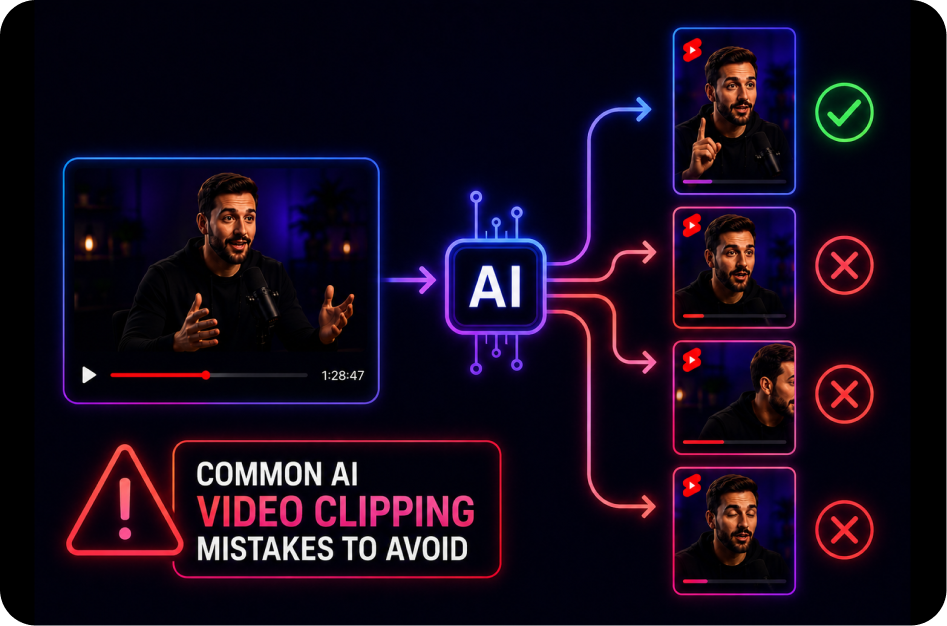
21 June 2026
Common AI Video Clipping Mistakes to Avoid
21 June 2026
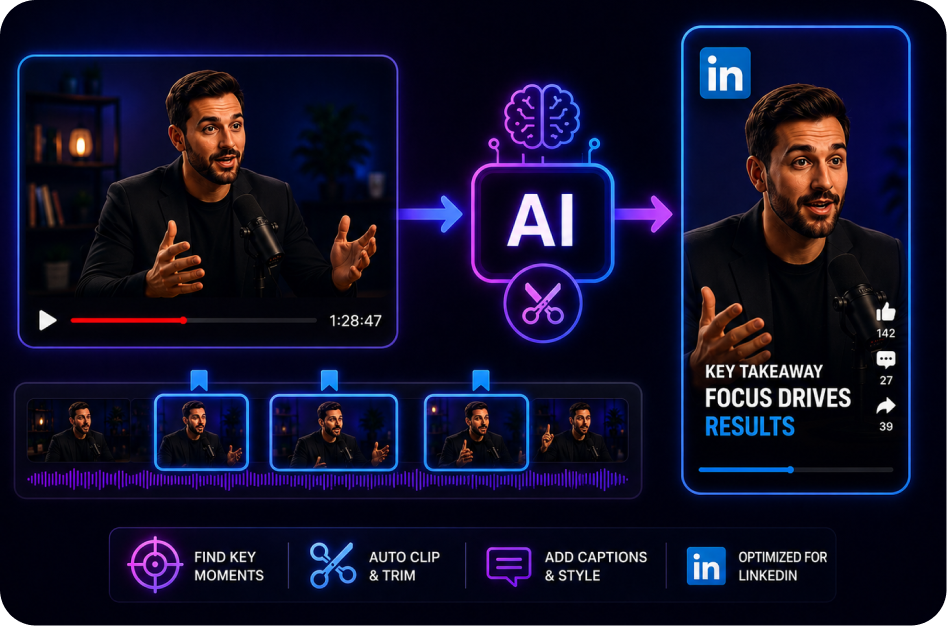
How to Create Short Clips for LinkedIn Video
21 June 2026
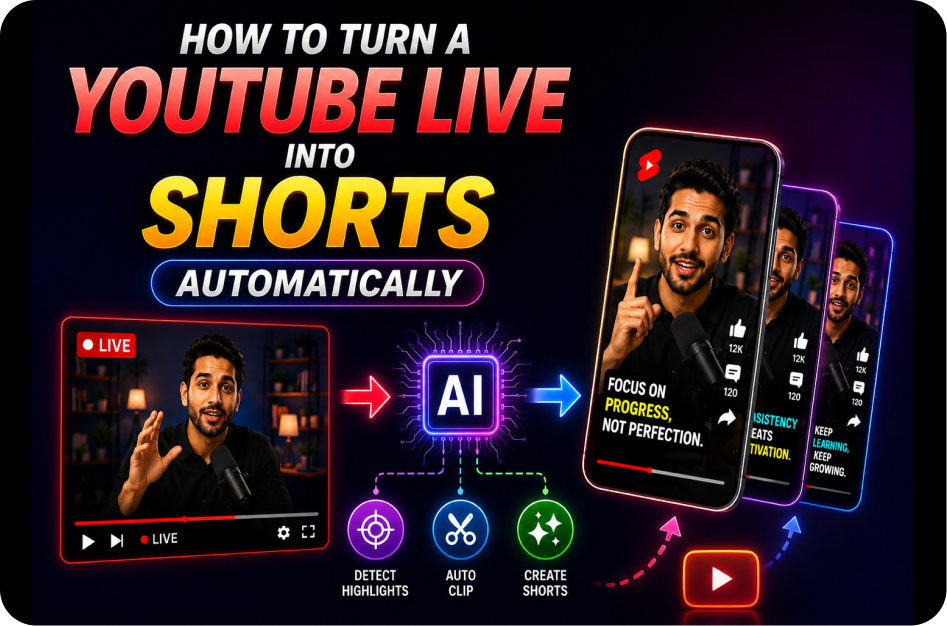
How to Turn a YouTube Live into Shorts Automatically
21 June 2026
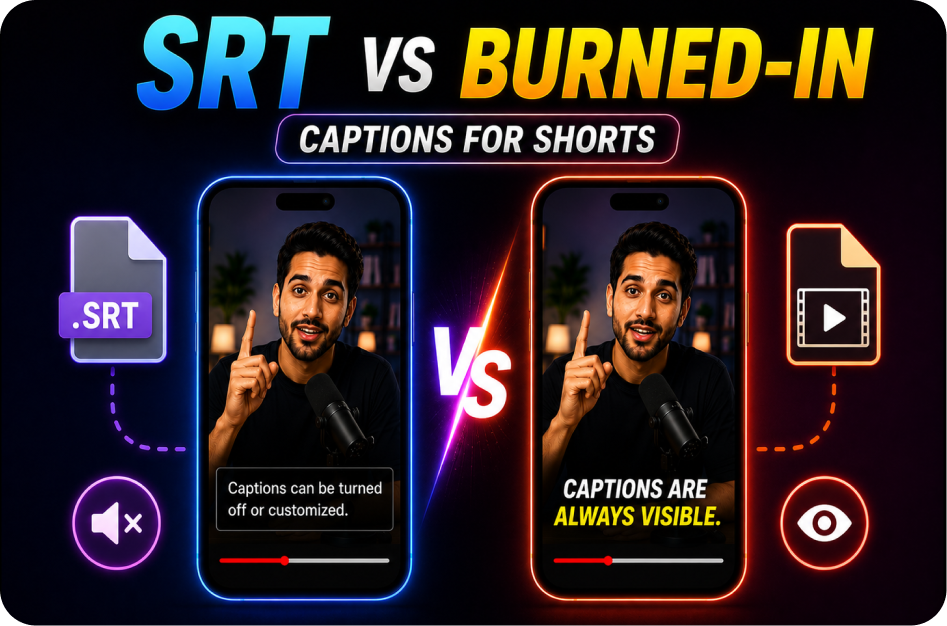
SRT vs Burned-In Captions for Shorts
21 June 2026
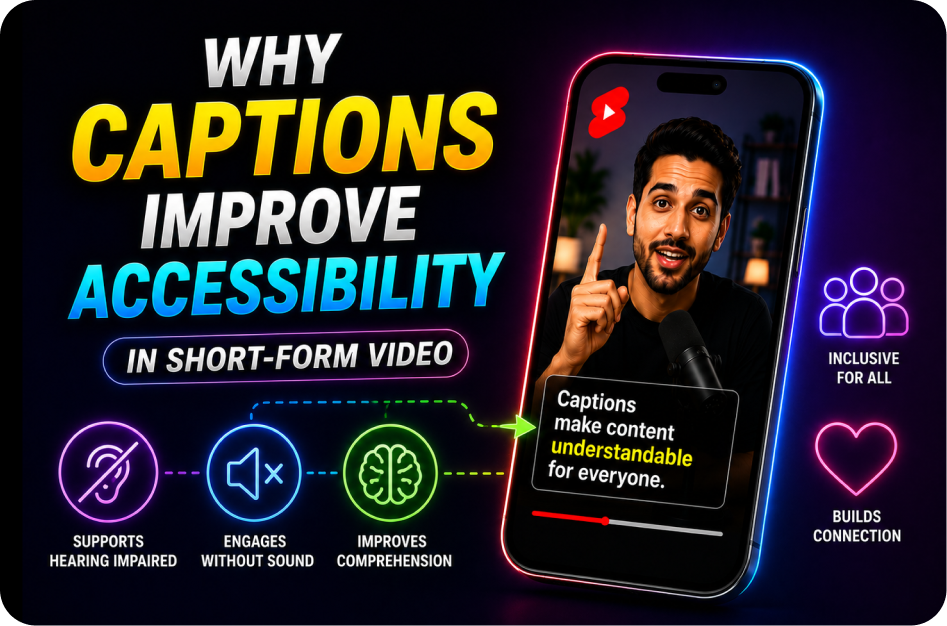
Why Captions Improve Accessibility in Short-Form Video
21 June 2026